IB Global Politics Concepts and Case Studies

Isbl LBDP Students
Students
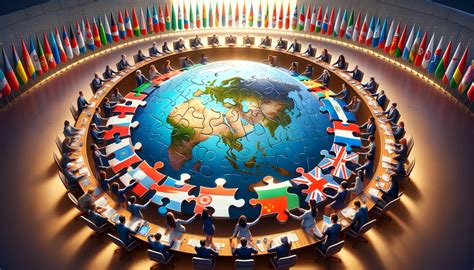
IB Global Politics Concepts and Case Studies
Global politics examines how power, sovereignty, legitimacy and interdependence shape decisions within and across borders. This article explains the four core topics—power, peace and conflict, development, and human rights—through key concepts, competing perspectives and case studies. Each example connects a political claim to its context and possible limitations.
1 Power sovereignty and global governance
1.1 Power
Power is about achieving desired goals and influencing others. It is the ability to change the behaviour of others, with or without resistance. There are different amounts and types of power in global politics. States may be powerful in different ways: a state can have military power but lack economic power. International organizations (IOs), non-governmental organizations (NGOs), terrorist groups and transnational corporations (TNCs) also have power to pursue their interests. Power can be used to achieve material goals or to persuade others to adopt a political or economic idea. Power is not fixed.
Military power is often measured by the size of a state's military or its military spending. Its effectiveness should also be judged through the conflicts in which the state engages. The United States has impressive military resources, yet did not achieve all of its aims in Iraq and Afghanistan. One argument is that military power is less useful because interstate war is declining, there is public resistance to deployments, and states often fight non-state or armed opposition groups. The counterargument is that it remains important for deterring threats, protecting civilians and responding to non-state actors; intrastate and civil wars still occur.
Power can be understood through its distribution. In a unipolar system one state has more power than others; in a bipolar system two states dominate; in a multipolar system power is spread among several states. The distribution of power affects international stability and conflict. During the Cold War, the balance of power between the United States and the Soviet Union was linked to a form of international stability, despite severe tensions.
Realism asks which actor is most powerful. Liberalism considers how power can be shared collectively. Power can be measured as resources, such as economic capacity and population, but these do not automatically show how effectively a state uses its resources. Measuring power as behavioural outcomes means examining whether other actors did what the state wanted.
Hard power achieves an aim through coercion or force, usually military or economic. The campaign against ISIS is one example. Russia's invasion of Ukraine is another example of using force for geopolitical aims, followed by sanctions from Western countries. Economic power can be examined through GDP, GDP per capita and economic growth. It can be used as hard power, including sanctions. A country such as Japan or Germany may be economically powerful without equivalent military power.
Soft power pursues an aim through attraction, persuasion and influence. Culture, foreign policy, political values, education and aid can persuade other states. Examples include US aid and development, China's investment in African infrastructure, US cultural influence through Hollywood and media, humanitarian assistance, and sports diplomacy. Soft power can bring long-term benefits, but trust and credibility are essential; a government cannot fully control how its culture is received abroad.
Smart power combines hard and soft power, selecting tactics according to the goal. Consider the nuclear negotiations involving Iran and the P5+1 as an example of diplomacy, economic sanctions and the possibility of military pressure being used together.
Power can change over time. The rise of China and other BRIC countries, the 2008 financial crisis and limits of prolonged military campaigns all inform debates about changes in US power. Power diffusion refers to the growing influence of non-state actors as well as states; online networks can help groups organize or influence others.
Relational power is a state's ability to influence another through an existing relationship. It is useful to distinguish threats and rewards, control of the agenda, and establishing preferences as ways to exercise relational power. Structural power is the ability to shape the ideas, institutions and frameworks of global politics, such as a dominant economic model or form of government. Strategic alliances are forms of cooperation that states may use for mutual benefit.
It is useful to distinguish power as a resource from power as an observed outcome. A large army, high GDP or a large population suggests potential capability, but the more demanding question is whether that capability changes another actor's behaviour. A state that spends heavily on armed forces can still fail to achieve its political objective. Conversely, a state with fewer military resources can have influence through trade, diplomacy, institutions or a strategically important relationship. This distinction is useful when evaluating a claim such as “Country X is the most powerful”: first specify the form of power, then identify the goal and assess the outcome.
Hard power is not restricted to armed force. A state can threaten or impose economic costs to alter another state's choices. Sanctions and trade restrictions therefore belong in a discussion of coercion, alongside military action. Both the intended effect and unintended consequences need comparison. Military force against a non-state group may weaken that group while leaving the political conditions behind conflict unresolved. An economic sanction may create pressure but also harm civilians or deepen a rival state's determination to resist. The presence of a powerful tool does not establish that its use succeeded.
Hard-power examples include the US campaigns in Iraq and Afghanistan, operations against ISIS, and Russia's use of force in Ukraine. The first two challenge the simple assumption that military superiority guarantees success. The ISIS example shows why force can still matter against armed non-state actors. The Ukraine example raises a further distinction: a state can achieve a short-term military gain while suffering diplomatic isolation or economic sanctions. The result depends on which objective and time frame are being assessed.
Soft power depends on attraction rather than compulsion. Key examples include culture, political values, educational exchanges, foreign policy, aid and humanitarian action. US entertainment can reach a global audience; development assistance can make a country appear helpful; a sporting event can connect societies. Yet an audience can reject an official message if it distrusts the state's policy or motives. The example of US aid following the Haiti earthquake illustrates how assistance can be both humanitarian and a source of influence. China's investment in African infrastructure similarly offers development opportunities while potentially increasing China's access to markets or resources.
The “smart power” idea is a choice of means rather than a new stock of resources. Diplomacy, sanctions, incentives and a credible security position can be combined. The Iran nuclear negotiations involving the P5+1 combined several diplomatic and coercive tactics. To evaluate smart power, ask whether the combination produced a more durable outcome than any single instrument, and whether all parties regarded the agreement as legitimate.
Power transition refers to changes in relative power over time. Relevant developments include the economic rise of China and BRIC countries, the 2008 economic crisis, and the limits of prolonged US military campaigns. Power diffusion refers to more actors possessing tools of influence: NGOs can mobilize an international audience, firms can affect policy through investment, and online networks can coordinate action. A shift in the distribution of power among states and a diffusion of power to non-state actors are related but distinct processes.
There are three relational mechanisms. First, an actor can offer rewards or threaten penalties. Second, it can shape the agenda so certain choices are considered while others are excluded. Third, it can influence what others come to prefer. Structural power goes further: it shapes the rules and institutions within which choices are made. These ideas help explain why an actor can appear influential even when it never directly orders another actor to act.
1.2 Sovereignty legitimacy democracy and statehood
Sovereignty means a state's ability to rule itself: supreme authority within its borders and independence from external control. It is an essential principle of global politics. States defend their own sovereignty while also being expected to respect that of other states. Internal sovereignty concerns independent governance, laws, taxes, trade policies and rights within borders. External sovereignty concerns how states interact with other states and international organizations. Recognition by other states matters for statehood; Cyprus, Palestine, Kosovo and Scotland show different questions of recognition and statehood in this context.
Global governance may limit the independent choices of a state through international rules and commitments. Yet states voluntarily join organizations and treaties and may do so to protect national interests. Supranationalism involves states transferring some authority to a higher body whose decisions may bind members. The European Union and the European Court of Justice are examples. Intergovernmentalism describes cooperation in which states retain sovereignty and major decisions remain with national governments. The number of international agencies grew after the Cold War, while the balance between intergovernmental and supranational authority remains contested.
A central question is whether sovereignty is being eroded. One argument is that globalization, institutions such as the EU, international law and cross-border problems limit the freedom of states. A realist counterargument is that states remain central: they decide whether to cooperate, defend their borders and can resist international pressures. Consider Brexit as an example in this debate.
Legitimacy means that a group or action is regarded as acceptable under agreed rules or democratic principles. Democracy is a system in which people participate in government and representatives are held accountable. A state government delegates authority to regional or local governments, and democratic institutions can distribute power and protect rights. Weak democratic choice, unequal access and corruption can limit accountability. Authoritarian governments may rule without free elections, use coercion and disregard civil rights.
The separation of powers divides authority among the executive, legislature and judiciary. The legislature makes laws and holds the executive accountable; the judiciary interprets and applies laws. A constitution sets out limits and fundamental powers of government. The rule of law means that all, including those in power, are subject to law, with fair and independent courts.
A state must be able to control its territory and exercise authority. A state with insufficient internal power may struggle to provide security or rights. Conversely, a state with excessive internal power and too few checks may abuse rights. This illustrates the relationship between human rights and power at the national level.
It is important to distinguish the legal principle of sovereignty from a state's practical capacity. Recognition and a territorial claim matter, but so does an effective government that can make decisions and provide security. Internal sovereignty is authority within borders; external sovereignty includes independence in dealings with other states. A government may have legal recognition but limited control over parts of its territory. Another state may exercise strong internal control yet face external limits through treaties, debt or dependence.
Cyprus, Palestine, Kosovo and Scotland are listed as examples for discussing recognition and statehood. They should not be treated as identical cases. The relevant question in each is who claims authority, who recognizes that claim, what institutions actually govern, and which international rules are invoked. The Kosovo example appears alongside the International Court of Justice; the Crimea example appears in a debate over self-determination, recognition and territorial integrity. These cases show why sovereignty is both a legal idea and a political contest.
The argument that globalization erodes sovereignty begins with cross-border markets, information and environmental problems. A government cannot fully control all flows through its borders, and cooperation can require commitments. A supranational institution may make rules that bind its members. The opposing argument is that states negotiate, join, enforce or withdraw from institutions; the choice to cooperate itself can be an exercise of sovereignty. Brexit is useful for showing that a state can reconsider a regional commitment, although withdrawal has economic and diplomatic costs.
Democratic legitimacy has several possible sources in global politics: public participation, elections, representation, accountability, checks on leaders and acceptance of rules. Merely holding an election does not answer every question about fairness. If only a narrow range of choices is available, if power is concentrated, or if groups are excluded, political participation may be limited. The separation of powers distributes decision-making among executive, legislature and judiciary and creates opportunities for oversight. An independent judiciary can check whether a government's action complies with law.
The state is also the main actor expected to guarantee rights. A weak government may struggle to prevent abuse by armed groups or to fund services; an unchecked government may itself become the source of abuse. It follows that “more state power” as neither automatically good nor automatically bad. Effective capacity must be paired with accountability, law and an independent means of challenging decisions.
1.3 Realism liberalism and anarchy
Anarchy in international relations means there is no single authority above states. For classical realists, states are the principal actors; they pursue security, power and national interests in a self-help system. Machiavelli and Hobbes are named in global politics as thinkers associated with pessimistic views of human nature. States can become suspicious of one another. The security dilemma occurs when one state increases its capabilities for defence and others interpret this as a threat, prompting them to do the same.
Realists stress sovereignty, competition and the balance of power. In their view, relying only on cooperation without sufficient power can make a state vulnerable. Offensive realism emphasizes increasing relative power; defensive realism emphasizes securing enough power for safety. Competition and conflicts involving states after the Cold War show realism's continuing relevance.
Liberalism gives more weight to cooperation, international law, democracy, trade and institutions. It sees IOs as ways to reduce uncertainty, establish rules and help states resolve problems. Relevant examples include the UN, EU and NATO. Liberal accounts of peace include interdependence and the idea that democracies may be less likely to fight one another. They also acknowledge the limits of institutions and criticism of liberal foreign policies, including the Iraq War in 2003.
For realists, the absence of a superior authority produces uncertainty. Even if leaders say that they intend only to defend themselves, others cannot be certain what they may do later. States look at capabilities as well as intentions. A build-up of weapons can therefore prompt an opposing build-up. The security dilemma explains how defensive actions can create mutual fear without either side initially seeking war.
Realism gives particular weight to survival, national interest and relative gains. A state may hesitate to cooperate if another state will gain more from the agreement and become a future threat. It is also true that great powers often shape the agenda of international institutions. A realist can acknowledge diplomacy and treaties while arguing that their effectiveness depends on the interests and power of states.
Liberalism starts from the possibility of repeated cooperation. Institutions can provide information, set expectations, monitor compliance and give states a place to negotiate. Economic links can increase the cost of armed conflict. Democratic accountability may constrain leaders. Compare these arguments with instances in which institutions failed to prevent conflict, including disputes over Iraq and the tensions between NATO and Russia.
The Cold War is a useful test of both views. There was no direct full-scale war between the two principal powers, but rivalry, threats, arms competition and proxy conflicts persisted. A balance of power may have restrained direct conflict; it did not create positive peace in the broader sense. This distinction connects the theories of power to the later definitions of peace.
1.4 International organizations and global governance
Global governance describes how states organize themselves, make agreements and address shared problems through national and international institutions. There is no single world government. Liberal perspectives see global governance as a way to coordinate action and solve common problems. Realists argue that powerful states often use institutions to advance national interests and can constrain their effectiveness.
IOs are generally established by treaties or agreements among states. Members cooperate on particular issues and may seek to respect international law. Examples in global politics include the UN, EU, WTO, NATO, ASEAN and African Union. Organizations differ in membership, competence, function and decision-making authority. Membership can be regional or universal; functions can be issue-specific or broad. Decisions can be intergovernmental or supranational.
States use IOs to create rules, solve problems they cannot address alone, gain influence and increase economic cooperation. An IO may also have relative power over a weaker state. However, IOs often depend on member states for resources and enforcement. Powerful states may use vetoes or pursue their own interests, while unequal representation can limit legitimacy. Relevant examples include the UN Security Council and the limitations of the League of Nations.
The rise of IOs accelerated in the nineteenth and twentieth centuries, especially after World War II. Post-war institutions developed during a shift from bipolarity toward a more complex distribution of power. Forms of IO decision-making vary: intergovernmental bodies retain national control, while supranational bodies can make binding decisions.
Treaties are formal written agreements between two or more states or international actors. They may address issues such as nuclear non-proliferation or arms control. States must complete domestic stages of agreement and may seek to monitor compliance. The Treaty of Lisbon and the Minsk agreements illustrate different treaty contexts. Cooperation may be bilateral or multilateral.
IOs can be classified by membership, competence, function and authority. A regional organization draws members from a particular area, while a universal organization aspires to wider membership. An issue-specific institution has a narrower mandate than one addressing many aspects of peace or development. A body can issue recommendations, coordinate member states, or in some settings adopt decisions with direct legal consequences. These differences matter when judging whether an IO “failed”: first ask what it was actually authorized and equipped to do.
The UN is described as an arena for diplomacy and collective action rather than a world government. The Security Council can respond to threats to peace, but its permanent members can block action. States supply resources and decide how to implement many measures. Consider the Iraq War, Syria, the League of Nations and the Cold War as examples of institutional limits and changing political context. The number of institutions and agencies increased, yet an increase in organizations does not itself prove that they can enforce decisions independently.
Regional institutions can sometimes move further toward integration. The EU is used to show how common rules, a court and shared markets can influence national law. ASEAN is used in discussions of regional cooperation and non-interference. NATO is discussed primarily in relation to collective security and strategic alliances. The African Union appears in responses to conflict and regional peacebuilding. These bodies should be assessed against their different goals and decision rules.
There are several arguments for IO membership: states may gain a forum for negotiation, coordinate trade, share information, develop rules and increase their influence through coalitions. A smaller state may benefit from rules that give it a voice. The counterargument is that unequal resources and bargaining power can reproduce inequality inside an institution. Some states join to protect their own national interests, not because they have surrendered them.
Treaties provide written obligations, but the mere signature of an agreement does not guarantee compliance. Consider the Nuclear Non-Proliferation Treaty, the Treaty of Lisbon, and the Minsk agreements. For each, distinguish the stated obligation, the parties, a method of monitoring and the political conditions that affect implementation. Domestic legislatures and courts may also have a role in giving a treaty effect.
1.5 Interdependence
Interdependence means that states, economies or societies rely on and influence one another. It can be economic, political or linked to shared challenges such as climate change. Globalization increases cross-border links. Interdependence may encourage peace by making conflict costly, but it can also create vulnerabilities and unequal dependence.
Russia and the EU's energy relationship illustrates the possibility that one side can gain leverage through supply. China and the United States have extensive trade ties despite political tension. China's Belt and Road Initiative can create infrastructure links and economic dependence; this can involve both cooperation and political influence. Compare also India and Pakistan, Israel and Palestine, and states that lack interdependence or remain in unresolved conflict.
Kosovo's recognition and the International Court of Justice are discussed as an example of disputed statehood. The 2014 Crimea episode is used to discuss claims about sovereignty and self-determination. The South China Sea and Kashmir are additional contested areas. These examples show that legal, historical and political claims can collide.
Economic interdependence can create incentives for restraint because conflict threatens trade, investment and energy supplies. Yet the relationship may be asymmetrical: if one side can more easily find a substitute, it may use the other's dependence as leverage. The EU's reliance on Russian gas is the clearest example. The connection was economically useful while also creating a possible source of coercion.
The US–China trade relationship illustrates a different combination. Extensive exchange has continued alongside strategic competition. Trade does not automatically remove security disputes. India's relationship with Pakistan and the unresolved Israel–Palestine conflict likewise show that identity, territory, security and history can outweigh an economic incentive to cooperate.
The Belt and Road Initiative is presented as infrastructure and economic cooperation with a possible political dimension. Roads, rail and investment can benefit recipients, but financing and dependence may alter bargaining power. To evaluate a particular project, examine who pays, who owns it, what access it provides and whether the recipient can make an independent choice.
1.6 Power case studies
Russia and Ukraine 2022 — hard power sovereignty and collective response
In February 2022, Russia launched a large-scale invasion of Ukraine. The case is a direct example of hard power: a state used military force to pursue political objectives and change another state's behaviour. It also puts Ukraine's territorial sovereignty and the UN Charter's restrictions on the use of force at the centre of the analysis. On 2 March 2022, the UN General Assembly adopted a resolution by 141 votes to 5, reaffirming Ukraine's sovereignty and demanding Russia's withdrawal. The vote shows the ability of an international institution to express a collective position, while its lack of direct enforcement power illustrates a limit on global governance.
Claim: military power remains significant because force can alter conditions on the ground and compel other states to respond. Counterclaim: control of territory or military superiority does not by itself deliver a durable political outcome. Diplomatic isolation, sanctions, continuing resistance and costs to the aggressor complicate an assessment of “success.” In an IB answer, define the precise goal and time period before judging effectiveness. The same case can support an argument about sovereignty, the limits of IOs or the interaction of military and economic power.
Source: United Nations General Assembly meeting coverage, 2 March 2022 — https://press.un.org/en/2022/ga12407.doc.htm
United States in Afghanistan 2001 to 2021 — resources versus outcomes
The United States possessed overwhelming military and financial resources during its long involvement in Afghanistan. It could remove the Taliban government in 2001 and fund a large reconstruction effort, yet the Afghan government collapsed in August 2021 after the withdrawal of US forces. The US Special Inspector General for Afghanistan Reconstruction examined planning, implementation and sustainability across the twenty-year effort. This is useful for distinguishing *power as resources* from *power as an achieved political outcome*. A state may win battles or spend heavily without building a political order that can sustain itself.
Claim: large military resources can achieve immediate aims and protect a government for a period. Counterclaim: coercive capacity cannot substitute for local legitimacy, functioning institutions and a feasible long-term political strategy. The case should not be reduced to “military power is useless”: it shows that the effectiveness of a type of power depends on the objective, partners, institutions and time frame. It connects power to legitimacy and development.
Source: Special Inspector General for Afghanistan Reconstruction, *What We Need to Learn*, August 2021 — https://www.sigar.mil/pdf/lessonslearned/SIGAR-21-46-LL.pdf
China's Belt and Road Initiative — economic relational and structural power
China's Belt and Road Initiative supports transport infrastructure and cross-border connectivity. The World Bank's assessment found possible gains through lower transport costs and expanded trade, while emphasizing risks around debt, transparency and the design of projects. This makes the case more precise than simply calling infrastructure “soft power.” Financing and construction are economic resources; a close lending or trade relationship can create relational influence; control over routes and standards may contribute to structural power. Whether any particular project benefits a recipient depends on its terms and wider economic policy.
Claim: infrastructure investment can increase China's influence and give participating states access to markets. Counterclaim: recipient states have agency, and a project may produce mutual benefits rather than one-sided dependence. Conversely, potential gains do not remove financial and governance risks. In an IB response, examine who finances and owns a project, who receives the trade benefits, and whether reliance on one partner restricts future choices. This case also links power with interdependence and development.
Source: World Bank, *Belt and Road Economics Opportunities and Risks of Transport Corridors*, 2019 — https://documents1.worldbank.org/curated/en/715511560787699851/pdf/Belt-and-Road-Economics-Opportunities-and-Risks-of-Transport-Corridors.pdf
Brexit and the European Union — sovereignty within integration
The United Kingdom formally left the European Union on 31 January 2020 after negotiating a withdrawal agreement. EU membership had involved common rules and shared decision-making, and departure required further negotiation over the future relationship. Brexit therefore provides a case for testing the claim that supranational institutions erase state sovereignty. The UK was able to decide to withdraw under the treaty process, which demonstrates continuing state agency. At the same time, its economic and legal ties with the EU meant that exercising this choice involved negotiation and trade-offs.
Claim: international integration constrains unilateral decisions because a state accepts common rules and interdependence. Counterclaim: joining and leaving an institution can themselves be sovereign decisions. A strong answer distinguishes *legal authority to withdraw* from *practical freedom from economic consequences*. This example fits sovereignty, interdependence and the different forms of power that states and institutions exercise.
Source: Council of the European Union, *EU–UK withdrawal agreement* — https://www.consilium.europa.eu/en/policies/the-eu-uk-withdrawal-agreement/
2 Peace and conflict
2.1 Conflict war violence and peace
War is an organized, sustained conflict between states or groups. It is useful to distinguish conventional war, modern or asymmetric warfare and post-modern forms of conflict. Conventional war is commonly associated with states, battlefields and military forces. Modern conflicts may involve irregular forces, urban areas, civilians, cyber tools and contested identities. Not all conflicts meet a numerical threshold sometimes used to define war; classification depends on the definition chosen.
Conflict is a disagreement or competition over power, ideology, identity, resources or territory. It need not involve direct violence. Violence can be direct, structural or cultural. Direct violence is physical harm. Structural violence occurs when social, political or economic arrangements systematically disadvantage groups. Cultural violence involves norms or beliefs that justify other forms of violence.
Negative peace is the absence of direct violence, such as a ceasefire. Positive peace requires conditions that allow people to live with dignity, including justice, equality, institutions and reconciliation. A ceasefire may stop immediate fighting without settling underlying causes. The Northern Ireland peace process and the 1998 Good Friday Agreement are used to distinguish a cessation of violence from a broader political settlement.
Compare realist and liberal views of peace. Realists emphasize security, order, protection and deterrence. Liberals emphasize diplomacy, negotiation and cooperation through IOs. Peace can be unstable when power imbalances, discrimination, exclusion or unresolved grievances remain.
The security dilemma is a problem in which one state increases military capability to feel safer, while others interpret that increase as a threat. Their reactions can make all sides less secure. Consider NATO, Russia and Ukraine as an example of how security perceptions differ.
It is useful to distinguish interstate conflict, which involves states, from intrastate conflict, which occurs within a state and may involve a government and organized groups. Many contemporary conflicts cross this line when foreign states fund or support parties in an internal war. “Modern war” includes irregular tactics, fighting in cities, the involvement of civilians, and a wider range of weapons and actors. “Post-modern war” is linked to identity, discourse and the blurred boundary between organized forces and the surrounding society.
Direct violence is the most immediately visible kind of harm. Structural violence describes avoidable inequalities built into institutions or resource distribution. Cultural violence refers to beliefs that normalize or justify such inequality or harm. These forms can reinforce one another. An agreement that ends open fighting addresses direct violence; a longer peace process may need to address exclusion, discrimination and access to resources.
The absence of open fighting is negative peace. Positive peace asks whether people can live securely, participate in society and have their needs and rights respected. The Northern Ireland example starts with the cessation of violence and the Good Friday Agreement, then considers power-sharing, institutions and relations between communities. The agreement is significant, but an agreement's existence alone is not proof that every grievance has disappeared.
A realist view explains why states may rely on deterrence and a balance of power. A liberal view emphasizes negotiation, international organizations and the benefits of cooperation. Neither view should be treated as a guarantee of peace. A strong deterrent may prevent direct attack while leaving tension, and negotiations may fail if actors do not trust enforcement or believe they will gain more by fighting.
2.2 Just war humanitarian intervention and peacebuilding
Just war theory asks when war can be morally justified and how force should be limited. The usual criteria are just cause, reasonable chance of success, legitimate authority, proportionality and last resort. Peaceful options such as diplomacy and negotiation should be considered first. International law and the UN Security Council affect the legitimacy of force, but states disagree over the interpretation of those rules.
Humanitarian intervention involves action, sometimes military, aimed at protecting people from grave abuses. Consider the tensions between protecting people and respecting sovereignty. Libya in 2011, Somalia and Syria are among the examples. The Responsibility to Protect (R2P) says states have a primary responsibility to protect their populations; the wider international community has responsibilities when a state fails. Other considerations include political disagreement, inconsistent responses and possible abuse of humanitarian claims.
Peacemaking attempts to end active violence, often through negotiation or mediation. Peacekeeping seeks to maintain a ceasefire or agreement. Peacebuilding addresses underlying causes and supports a durable peace. Measures may include reconciliation, rebuilding institutions, education, health services, disarmament and reintegration, and support for economic opportunity. Development support can contribute to lasting stability.
Peace enforcement may involve coercive measures authorized to restore peace and security. The UN, NATO and regional bodies may have different roles. This highlights the need for legitimacy, consent when appropriate, adequate resources and careful attention to unintended consequences.
Restorative justice emphasizes acknowledgement of harm and reconciliation. Retributive justice emphasizes accountability through punishment. South Africa's Truth and Reconciliation Commission is used as an example of transitional justice after apartheid.
The criteria of just war theory should be applied separately. A just cause concerns why force is contemplated. Legitimate authority concerns who may authorize it. Last resort asks whether reasonable peaceful alternatives have been attempted. Proportionality weighs the expected benefits against the harm likely to result. A reasonable prospect of success asks whether intervention can achieve its stated protective objective. A claim to meet one criterion does not settle the others.
Humanitarian intervention creates a difficult choice because sovereignty protects political independence, while people may need protection from serious abuse. Compare cases where outside actors intervened, did little, or disagreed over authorization. Libya in 2011 is discussed alongside R2P and the debate over the mandate and consequences of action. Syria is used to show how rivalry and veto power can block a unified response. The fact that a state requests help, as in global politics' discussion of Iraq, changes the legal and political context but does not remove the need to assess the action.
Peacekeeping, peacemaking, peace enforcement and peacebuilding are distinct tools. A mediator may bring adversaries to a negotiation. A peacekeeping mission may monitor a ceasefire. Enforcement may use coercive measures under an authorization. Peacebuilding seeks to prevent recurrence through governance, economic opportunities, education and reconciliation. The same conflict may require these tools at different stages. A narrow military success should be assessed against the wider goal of a sustainable peace.
A practical sequence for peacebuilding is to secure an agreement, reduce immediate risks, reintegrate those involved in fighting, restore public services, make political participation possible, and address the grievances that supported conflict. The examples of Colombia, Northern Ireland and South Africa show different paths; no single model can simply be copied without attention to local institutions and history.
2.3 Conflict case studies
Rwanda 1994: Colonial legacies, the political use of ethnic identity, inequality, propaganda and international inaction were contributing factors. The conflict's consequences included mass displacement and a severe humanitarian crisis. The example illustrates failures of prevention and international response.
Myanmar and the Rohingya: Consider discrimination, exclusion from citizenship, political tensions and military repression. International responses included UN criticism, recommendations, the ICC, ASEAN's limited role and measures by Western countries. The example is used to assess the limits of global governance when sovereignty is prioritized over human rights.
Syria: Civil war, external involvement and divisions in the UN Security Council made a settlement difficult. The case is used to discuss the effectiveness of IOs and the tension between national interests and civilian protection.
Israel and Palestine: Consider this as an example of an unresolved conflict where economic links alone have not produced peace. Identity, inequality, territory and occupation remain important.
Colombia: The 2016 agreement between the government and FARC is presented as a disarmament and peacebuilding example. This emphasizes both the potential of negotiations and the challenges of implementation.
Costa Rica and post-apartheid South Africa are given as examples associated with institutions, welfare and reconciliation. Botswana is cited as an African example of relative stability, while Iraq is a counterexample: the end of an armed campaign did not by itself produce positive peace.
ASEAN, the EU and the UN Sustainable Development Goals are discussed as possible contributions to regional cooperation, collective development and peace, while their ability to enforce outcomes varies.
Rwanda can be examined through structural, proximate and contributing factors. Colonial classification and the politicization of Hutu and Tutsi identities form part of the long-term background. The immediate political crisis and propaganda increased danger. Inequality, competition and the weakness of an effective international response are also noted. The case illustrates why prevention requires attention to early warning, protection and political incentives, not merely a response after violence has begun.
In Myanmar, the Rohingya's exclusion from citizenship, discrimination, military repression and displacement. International responses include UN statements, an ICC process, ASEAN's cautious stance and restrictions or pressure by Western states. The contrast between these responses permits an evaluation of the ability of global governance to protect people when a government rejects external interference.
Consider Syria as an intrastate war with external participants. A single peace agreement has been difficult because the parties have different goals and powerful states disagree over a response. The Security Council's role illustrates the difference between an institution's formal authority and its political capacity to act.
Colombia provides an example of negotiation with an armed group. The 2016 FARC agreement included disarmament and political commitments, but implementation depends on security, state presence, local trust and economic alternatives. This is a case of peacebuilding that extends beyond the absence of fighting.
The Northern Ireland case illustrates why a settlement can require new institutions and recognition of different identities. The South African Truth and Reconciliation Commission represents an attempt to address past abuses through testimony and reconciliation. Costa Rica is connected to social investment and political stability. Botswana is used as an example of relative stability, whereas Iraq after 2003 is used to question whether removing a government by force can produce a durable positive peace.
3 Development globalization and sustainability
3.1 Development and its measurement
Development means sustained improvement in a society's standard of living and opportunities. The definition is debated. Economic growth is important, but development includes health, education, freedom, social equality, political participation and environmental conditions. Maslow's hierarchy of needs appears in global politics as a way to consider basic needs before higher aspirations.
Human development focuses on people's freedoms and opportunities to pursue lives they value. Consider capabilities such as good health, knowledge, control over one's environment and freedom from violence. Economic development concerns production, income and a diversified economy. Social and political development concern equality, responsible government, the rule of law and participation.
Income-based measures include GDP and GDP per capita. GDP per capita can indicate average output but does not show how income is distributed. The Gini coefficient describes inequality, from greater equality near zero to greater inequality toward one. The Human Development Index is broader because it includes income, education and life expectancy. The Happy Planet Index appears as another possible measure. Every measure has limits and should be interpreted in context.
An important distinction is between output and lived conditions. GDP measures the value of economic production, but it does not show who receives the income, how safe people are, whether girls and boys can attend school or whether pollution has increased. GDP per capita divides output by population and is an average, not the income of a typical household. A country can improve its average while leaving many people behind.
The Gini coefficient is used to discuss the distribution of income. A value nearer zero represents more equality; a higher value represents more inequality. Even this measure cannot describe every dimension of deprivation. The Human Development Index combines income with education and life expectancy. A useful approach is a comparison of measures rather than the selection of one “perfect” development score.
Human development shifts attention from resources alone to capabilities and choices. Good health, access to knowledge, an opportunity to earn a living, and protection from violence affect what people are able to do. Political freedoms and accountability also shape development. Maslow's hierarchy is used as a classroom model of needs, but it does not replace evidence about a particular country.
3.2 Theories of development
Modernization theory connects development to industrialization, infrastructure, investment and changes in production and consumption. Rostow's stages are: traditional society, preconditions for take-off, take-off, drive to maturity and high mass consumption. A criticism is that this model is strongly based on Western experiences and assumes that all societies follow the same route. Colonial legacies and policies that protected industries in wealthy countries.
Dependency theory and world-systems theory focus on unequal relations between a wealthy centre and a poorer periphery. Powerful countries may benefit from resources and labour in less developed countries, maintaining unequal trade and dependence. This perspective locates obstacles to development in the global economic structure as well as in national choices. Neo-colonialism is part of this analysis.
Neoliberalism emphasizes market competition, private enterprise, trade liberalization, reduced tariffs and foreign investment. Structural adjustment programmes associated with the IMF and World Bank encouraged governments to reduce spending and change economic policy. Supporters expect competition and investment to stimulate growth. Critics argue that cuts to public services, dependence on foreign capital and unequal starting positions can harm vulnerable groups. This includes the idea of a “trickle-down” effect and its criticism.
An alternative human-centred approach treats development as freedom. Amartya Sen argues that growth should expand people's actual capabilities. The UN Millennium Development Goals and Sustainable Development Goals illustrate international targets that include poverty, education, equality, health and environmental protection.
Modernization theory treats development as a transition from a traditional agricultural economy toward industrial production and mass consumption. One influential theorist is Rostow and describes take-off and a drive to maturity. Infrastructure, investment and education can help. The criticism is that this model presents a Western historical path as universal, pays insufficient attention to colonialism, and can overlook different political and cultural choices.
Dependency theory sees an unequal global structure. A poorer country may export raw materials cheaply while importing higher-value goods. The wealthy centre gains, while the periphery remains dependent on investment, technology and demand from elsewhere. World-systems theory extends this analysis to the world economy as a whole. These views connect to neo-colonialism and to the continuing effects of earlier colonial relations.
Neoliberal policies seek to open markets and reduce barriers to trade. Governments may privatize enterprises, cut subsidies and public spending, or invite foreign investment. Consider structural adjustment programmes associated with the IMF and World Bank. Supporters expect efficiency and growth. Critics ask who loses access to public services, how a government can develop its own industries, and whether a freer market is fair when countries begin from unequal positions.
The “trickle-down” argument says that the wealth created by investors and firms may eventually benefit poorer groups. That claim is uncertain. Growth can remain concentrated; wage, health and education outcomes should be measured directly. A human-centred approach associated with Sen asks whether policies enlarge people's real freedoms. This gives a way to evaluate a policy even when its GDP outcome looks impressive.
3.3 Globalization
Globalization is the process of interaction and integration across countries through trade, movement of money and goods, ideas, communication technology, social media and transnational politics. Economic globalization increases the interdependence of economies; political globalization involves international rules, organizations and advocacy networks; cultural globalization spreads and transforms ideas, values, media and practices.
Possible advantages include investment, jobs, cheaper products, access to technologies and wider exchange of ideas. In some contexts, connections can increase political participation or spread norms concerning rights. Possible disadvantages include unequal competition, poor working conditions, dependence, the weakening of local businesses and the concentration of benefits among powerful actors. Consider competition over wages and prices, the ability of firms to relocate, and the difficulty of regulating cross-border production.
Globalization may lead to cultural homogenization, particularly through dominant media and brands, but it can also produce hybrid cultures. Political globalization can increase the influence of NGOs and IOs, although states still control many laws and borders. A central question is whether globalization reduces state power or instead gives some states new ways to exercise it.
India is used as an example of uneven benefits: economic growth and access to wider markets did not remove rural poverty, inequality or disparities in education and services. Economic globalization created opportunities and pressures at the same time. Other examples include Albania, the World Economic Forum and cooperation on international agendas.
Economic globalization includes cross-border trade in goods and services, international production, movement of finance and the spread of technology. It can give businesses access to larger markets and give consumers more choices. It can also make local firms compete with much larger producers. Consider wage competition, price competition and the ability of companies to choose locations with different labour rules.
Political globalization involves shared rules and the spread of ideas across borders. The UN, IOs, NGOs and transnational campaigns can place issues on a global agenda. Relevant examples include the advocacy of the UN Human Rights Council and refugee-related bodies. This does not mean that national political choices disappear: governments still approve many laws, control budgets and negotiate institutional commitments.
Cultural globalization makes films, music, brands, languages and values accessible across borders. This can involve both homogenization and hybridization. A global brand may crowd out a local producer; people may also combine outside ideas with their own traditions. Access to another culture can expand choice, but unequal control of media can give some societies more influence than others.
The India discussion highlights uneven effects within a country. Growth and integration can improve opportunity for some people, especially in cities or globally connected sectors, while small farmers and rural households lack capital, technology or stable access to markets. If a policy favours large producers, aggregate growth may conceal an unequal burden. The example supports the distinction between national growth and development for all groups.
3.4 Sustainability
Sustainability is the ability of societies and groups to maintain well-being over time without undermining the conditions on which it depends. Consider three connected pillars: economic, social and environmental sustainability. An economy and society depend on the environment; gains in one area can be weakened if another is neglected.
Economic sustainability includes productive capacity, infrastructure, livelihoods and access to resources. Social sustainability concerns health, education, equality, women's empowerment and social justice. Environmental sustainability concerns natural resources, food, water, pollution and energy. This shows that growth can damage the environment if policy lacks safeguards.
Globalization may spread knowledge and technology that help sustainability, while competition can also encourage overuse of resources and weak regulation. A country's economic and political power affects its ability to implement environmental policies. Compare the “Global North” and “Global South” in wealth, technology, population patterns, productivity and vulnerability, while warning that these are broad categories.
Women’s empowerment is described as a contributor to social sustainability: education, work, health, control of income and participation in decisions can benefit individuals, families and communities. Gender equality is therefore central to development goals.
The economic pillar concerns whether livelihoods and production can continue. The social pillar concerns rights, health, education, equality and institutions. The environmental pillar concerns water, food systems, biodiversity, pollution and energy. These are connected: an economy that exhausts its natural resources undermines its own future, while environmental protection will be harder to maintain if people lack secure livelihoods.
Key examples include policy examples such as renewable energy, lower pollution, responsible use of water, investment in public services and opportunities for women. They also emphasize the political challenge: governments may prioritize immediate growth even when environmental costs appear later. Richer countries may have more resources to shift technologies, while poorer countries can face pressure to develop quickly with fewer choices. Cooperation can transfer useful technology, but finance and power relations matter.
Social sustainability includes women's education, health and participation in the economy and public life. These arguments suggest that these changes can affect family well-being and community outcomes. The Millennium Development Goals and the Sustainable Development Goals offer examples of attempts to define common targets, though achieving a target depends on policy and implementation rather than an agreement alone.
3.5 Development case studies
China: China has followed a strong state-led development strategy since the late twentieth century. Central planning, industrial policy, infrastructure, poverty reduction and strategic investment contributed to growth. The strategy also brought pollution, resource pressure, uneven gains, limits on political freedoms and the challenge of balancing growth with social and environmental protection. The central claim is that state capacity can accelerate development, with trade-offs that require attention.
Costa Rica: Democratic institutions, environmental policies, renewable energy, education and public investment can support sustainable development. The country is presented as an example of state policy supporting environmental protection and well-being.
Somalia: Consider institutional weakness, conflict, corruption and limited capacity to provide security or services as obstacles to development. The example links governance and stability to outcomes.
Botswana: Relatively strong institutions, governance and stable economic management after independence supported development. It is used to argue that institutions matter for sustainable economic growth.
Other examples include the role of small-scale farmers, reduced access to capital or technology, and policies that favour large producers. They use these to illustrate how growth can be unevenly distributed.
China is presented as a case of substantial poverty reduction and rapid growth supported by state planning, industrial policies and infrastructure. Key examples include transport, energy and investment as areas of state action. They also identify pollution, uneven wealth, environmental strain and limited political freedom. Thus the case supports an argument for effective state capacity while providing a counterargument that growth alone cannot measure sustainable human development.
Costa Rica illustrates a different combination of state action and democratic institutions. Relevant examples include environmental policies, renewable energy, public investment and protection of nature. A comparison with China should keep scale and historical context in mind; the useful common question is how state decisions shape social and environmental outcomes.
Botswana's post-independence institutions are described as relatively inclusive and stable. Relevant examples include property rights, public revenue and investment in education, health and infrastructure. Somalia offers a contrasting case in which weak institutions, insecurity and corruption prevent a government from providing basic services. The comparison supports institutional explanations while showing that no single factor determines every outcome.
4 Human rights and justice
4.1 Human rights liberty and equality
Human rights are rights to which all human beings are entitled by virtue of their humanity, without discrimination. The Universal Declaration of Human Rights (1948) sets out a global statement of these rights. Key examples include four principles: universality, interdependence, indivisibility and inalienability. Universality means rights apply to all; interdependence means protecting one right can help protect others; indivisibility rejects a hierarchy in which some rights can simply be ignored; inalienability means rights cannot legitimately be taken away from a person.
Negative rights require others, especially the state, to refrain from interference. Examples include freedom of speech and religion, privacy, property and life. Positive rights require action and resources to make protection meaningful, including education, health care and employment. The principle of progressive realization means that some social and economic rights require continuous efforts and effective use of available resources.
Liberty concerns freedom from arbitrary control and the ability to act. Rights ideas developed through milestones such as Magna Carta and the work of Locke and Rousseau before later international agreements under the UN. First-generation rights concern civil and political liberties; second-generation rights concern economic, social and cultural rights; third-generation or solidarity rights concern shared interests such as peace, development and environmental protection.
Equality means that people should be treated fairly and have meaningful opportunities. Laws, public services and participation can support equality, but formal equality does not automatically remove structural disadvantage. Equality connects with social and economic rights and the state's duty to provide services.
Justice refers to fair treatment under accepted rules applied equally, including a fair trial. The rule of law requires that no one be above the law and that independent courts protect rights. Power and corruption can undermine fair application.
The four principles of human rights should be read together. A right is universal because it belongs to every person. Rights are interdependent because a person may be unable to exercise a political freedom without education, safety or access to information. They are indivisible because a government cannot simply declare one set irrelevant. Inalienability means that citizenship, social position or a government's preference does not erase a person's basic status as a rights-holder.
The Universal Declaration of Human Rights was adopted in 1948. It informed later treaties and domestic protections. The first generation of rights is commonly associated with civil and political freedoms and limits on state interference. The second concerns economic, social and cultural rights, which often require public services and resources. Solidarity rights concern shared issues such as peace, development and a healthy environment. The categories are a learning tool; in practice, the rights overlap.
The difference between negative and positive rights is about the kind of duty involved. For a negative right, a state should usually refrain from unjustified interference. For a positive right, it may need to organize and fund protection. A fair trial, for example, requires institutions as well as restraint. It would be mistaken to assume that civil rights cost nothing or that social rights can be postponed indefinitely.
4.2 Protection promotion and monitoring
Governments have primary responsibility for protecting rights within their territory. International agreements, regional courts, UN bodies, NGOs and civil society can promote accountability. It is useful to distinguish codification, protection, promotion and monitoring. Codification gives rights a written legal form; protection responds to abuses; promotion develops awareness and standards; monitoring examines compliance.
The International Covenants on Civil and Political Rights and on Economic, Social and Cultural Rights (1966) expand on the Universal Declaration. Regional mechanisms include the European Convention on Human Rights (1950), European Court of Human Rights, African Charter on Human and Peoples' Rights (1981) and Inter-American system. The Rome Statute (1998) created the International Criminal Court. Their authority, enforcement and membership differ.
International courts and commissions can issue judgments or recommendations, but sovereignty, limited resources, political resistance and lack of enforcement can prevent action. Consider the International Criminal Court, the UN Human Rights Council and the European Court as examples. National constitutions and courts can also protect rights, but a country may have strong laws on paper and weak implementation.
NGOs can gather evidence, advocate, inform the public and pressure governments and IOs. Relevant examples include Amnesty International, Human Rights Watch and LGBT rights organizations. They may influence behaviour through publicity, but they cannot directly compel a state in the way a government can.
A central debate is whether powerful states should intervene to protect rights elsewhere. One position emphasizes the responsibility to protect individuals when their state fails. The counterargument highlights selective intervention, national interests and sovereignty. The UN Security Council can authorize measures, but vetoes and geopolitical rivalry may prevent a response.
Codification records a right in a declaration, treaty or domestic law. It makes the standard clearer, but it is only a first step. Protection requires accessible remedies when a right is threatened. Promotion can include education, public debate and policy reform. Monitoring asks whether promises are being put into practice. A government may formally join a treaty while failing to investigate violations or provide a working remedy.
The International Covenants of 1966 develop civil and political rights and economic, social and cultural rights. The European Convention and European Court give individuals in participating countries a regional avenue of complaint, though judgments still face issues of implementation. The African Charter has a regional framework with rights and duties. Compare regional and universal mechanisms by reach, legal strength and respect for national sovereignty.
The International Criminal Court is discussed in connection with grave international crimes and the Rome Statute. Its jurisdiction and capacity are limited, and not all states participate or cooperate. A major difficulty is enforcing international law against a resistant state, particularly when powerful states disagree. Domestic courts, independent judges and constitutional protections can therefore be crucial.
The UN Human Rights Council and UN High Commissioner can monitor, report and raise public attention. NGOs can collect testimony, publish reports and press officials. Their influence often depends on credibility and public support. They cannot substitute for a functioning national legal system, but they may help make abuses visible when officials seek to hide them.
4.3 Rights in civil conflict and selected issues
During a civil war, relative deprivation and social grievances may contribute to collective action. Relative deprivation describes a perceived gap between what people think they deserve and what they experience. Social grievances can involve marginalization, exclusion and unequal access to basic needs. Identity, ideology, networks and opportunity can influence whether groups mobilize.
The Convention against Torture (1984) prohibits torture and other cruel treatment. It is a strong international standard, although ensuring compliance by every state is difficult.
Cultural relativism challenges a universal understanding of rights by arguing that values and practices are shaped by local culture. Consider women's rights in Saudi Arabia and harmful practices affecting girls as examples in a debate about culture and universal protection. A cultural explanation does not by itself resolve whether a practice violates a person's rights.
International advocacy against female genital mutilation includes UN action, education and law. Enforcement remains difficult where social norms favour the practice. Another issue is LGBT rights in Uganda: a law increased criminal penalties, while human rights organizations reported discrimination and abuse. The case illustrates the tension between domestic law, political claims and universal human rights.
Human rights are related to power at the international and national levels. A state with too little capacity may fail to protect its population; a state with unchecked power may itself violate rights. International bodies need state cooperation, while independent courts, civil society and public scrutiny can constrain abuse.
Relative deprivation refers to a perceived gap between expectations and lived conditions. Social grievances may arise when a group experiences exclusion, unemployment, discrimination or poor access to services. Such conditions do not mechanically cause violence. Organization, leadership, ideology, communication and political opportunity influence whether people mobilize and how they act. Consider the role of media in spreading a message and mobilizing supporters.
Cultural relativism raises a question about who gets to define the culture being invoked. A government or leader may claim that a restriction reflects tradition, while people within the same society disagree. A human rights argument asks whose rights and choices are affected and whether those affected have a voice. The examples concerning women's rights and LGBT rights are used for this debate.
In Uganda, a law imposing severe penalties on same-sex relationships drew criticism from human rights organizations. The case sets claims of domestic political or cultural authority against universal protection from discrimination. This is an example of how domestic law can conflict with international human rights advocacy.
Efforts to end female genital mutilation include international campaigning, education, national legislation and local social change. A legal prohibition without enforcement and community engagement may have limited effect. The topic illustrates the relationship between protection, promotion and monitoring.
The central political problem remains: rights require institutions that can act, but powerful institutions must also be constrained. An effective state can protect people from abuse; independent courts, oversight, free discussion and civil society can help prevent that state from abusing its own authority.
4.4 Human rights case studies
Rohingya in Myanmar — citizenship and the interdependence of rights
The Rohingya case connects citizenship status to the practical exercise of other rights. UN human rights reporting has criticized Myanmar's 1982 Citizenship Law and the resulting discrimination, while calling for equal access to citizenship and to civil and political rights. Restrictions on movement and access to education and health services show why rights are interdependent: exclusion from legal status can make it harder to obtain protection in everyday life. The 2017 crisis also placed displacement and international accountability on the global agenda.
Claim: international human rights institutions can document abuses, identify legal reforms and increase pressure for accountability. Counterclaim: documentation and resolutions cannot by themselves force a government to change policy or ensure that people can return safely. In an IB answer, distinguish the *codification* of a right from its *implementation*. This case can connect universality, equality, state sovereignty and the limits of international monitoring without treating all Rohingya experiences as identical.
Source: UN Human Rights Council documentation on Myanmar and the 1982 Citizenship Law — https://www.ohchr.org/Documents/HRBodies/HRCouncil/FFM-Myanmar/20190916/A_HRC_42_CRP.5.pdf
Uganda's Anti-Homosexuality Act 2023 — domestic authority and universal rights
Uganda enacted the Anti-Homosexuality Act in May 2023. The UN Secretary-General publicly expressed concern and called on Uganda to respect its international human rights obligations and end the criminalization of consensual same-sex relations. The case raises a conflict between a government's claim to make domestic law and the principle that rights apply to everyone without discrimination. It is also a case of power over individuals: the state can create and enforce law, while civil society and international institutions can contest its compatibility with human rights.
Claim: governments have authority to legislate in their own territory and may invoke domestic political or cultural arguments. Counterclaim: sovereignty does not remove obligations to protect people equally or justify discrimination. International criticism can bring attention to a problem, but it does not automatically change domestic enforcement. A careful IB discussion should identify the actors, the particular rights at stake, the state's power and the limits of international pressure. It should avoid presenting a government's stated justification as the view of everyone in that society.
Source: United Nations Secretary-General statement, 30 May 2023 — https://press.un.org/en/2023/sgsm21816.doc.htm
Efforts to end female genital mutilation — rights law and social change
The World Health Organization describes female genital mutilation as a violation of the rights of girls and women. The case is useful for assessing why legal prohibition, international advocacy and local social change need to work together. Governments can codify protection in law; health and education systems can support prevention; community advocates can challenge a practice's social acceptance. International organizations can provide evidence and coordinate programmes, but they rely on national and local partners to implement change.
Claim: universal human rights standards give governments and advocates a clear basis for protection. Counterclaim: a declaration or law alone may be ineffective if implementation is weak or people fear social consequences for rejecting a practice. The best analysis does not frame a society as having a single fixed culture. It asks whose voices are heard, how girls' rights are protected in practice and what evidence shows that an intervention has worked. This case connects universality, cultural relativism, promotion and monitoring.
Source: World Health Organization, *Female genital mutilation*, 31 January 2025 — https://www.who.int/en/news-room/fact-sheets/detail/female-genital-mutilation
IB Global Politics •
